
about me
story
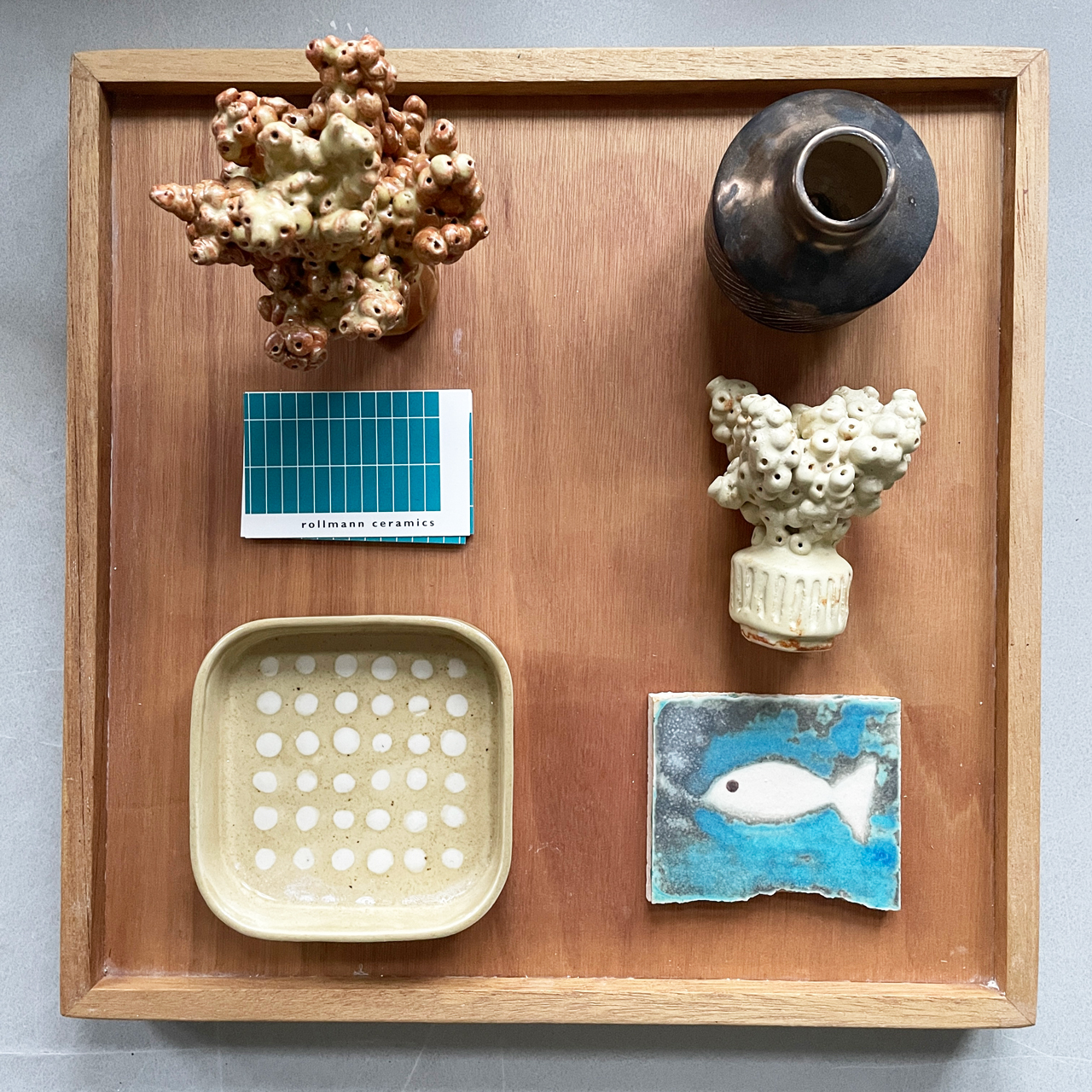
I was trained as an architect at the technical universities of Delft and Berlin. I worked at architectural firms and taught architecture at the HU in Utrecht.
Architecture formed me, gave me a way of looking at the world and knowing the importance of the detail. In other words: ‘the detail is the design’ (quote by Charles Eames).
A desire to make things where I have total control of the process, led me, with some detours, to exploring ceramics.
Very much from the start I realized that the most interesting thing about ceramics are the surfaces. They can have an infinite potential in colour and texture which is quite unique. Similar to architecture, the way you design your surfaces is a key element of the design.
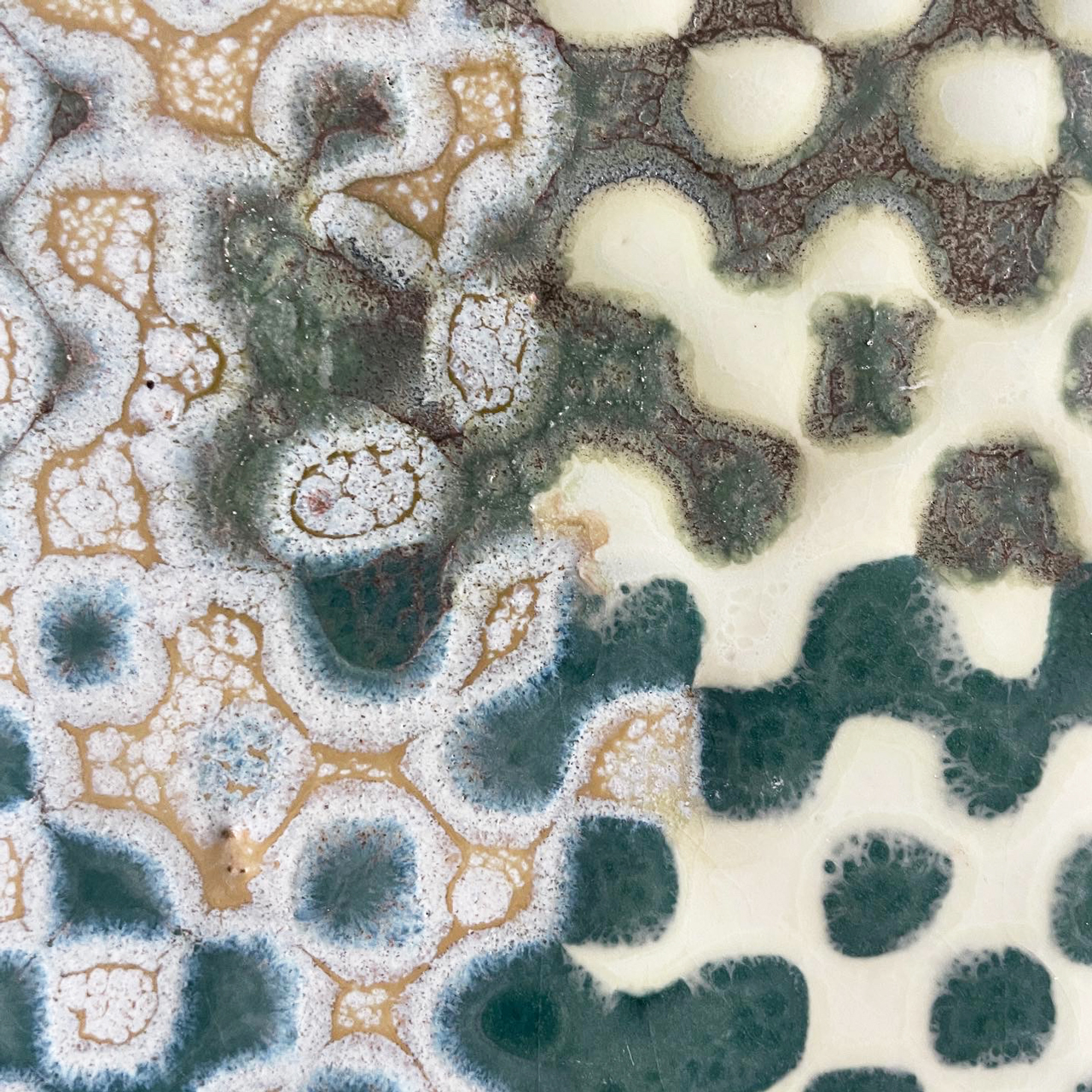
So I seriously started studying ceramic glazes. And combining these glazes in layers and patterns. This results in graphic designs, applied mostly on flat surfaces.
my studio
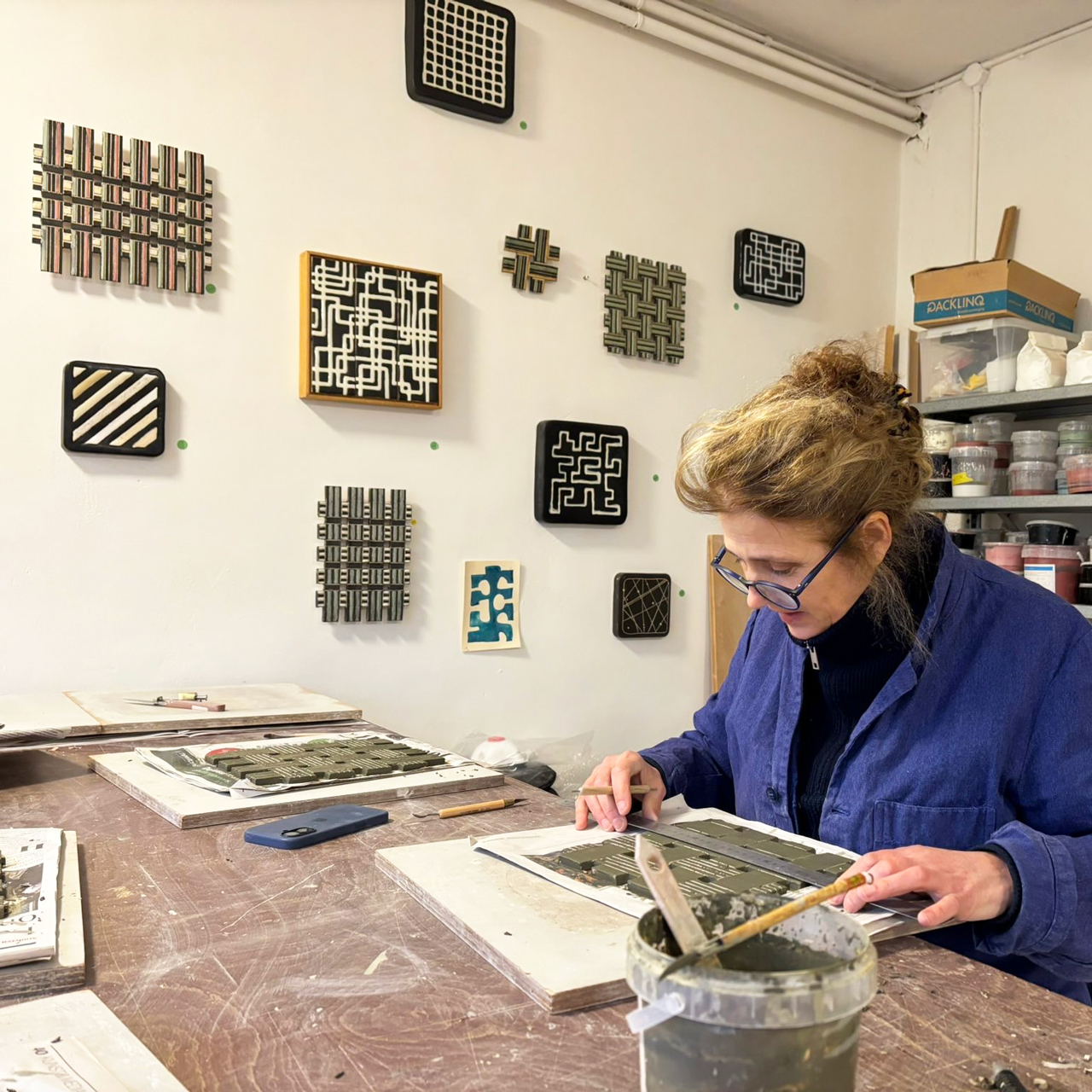
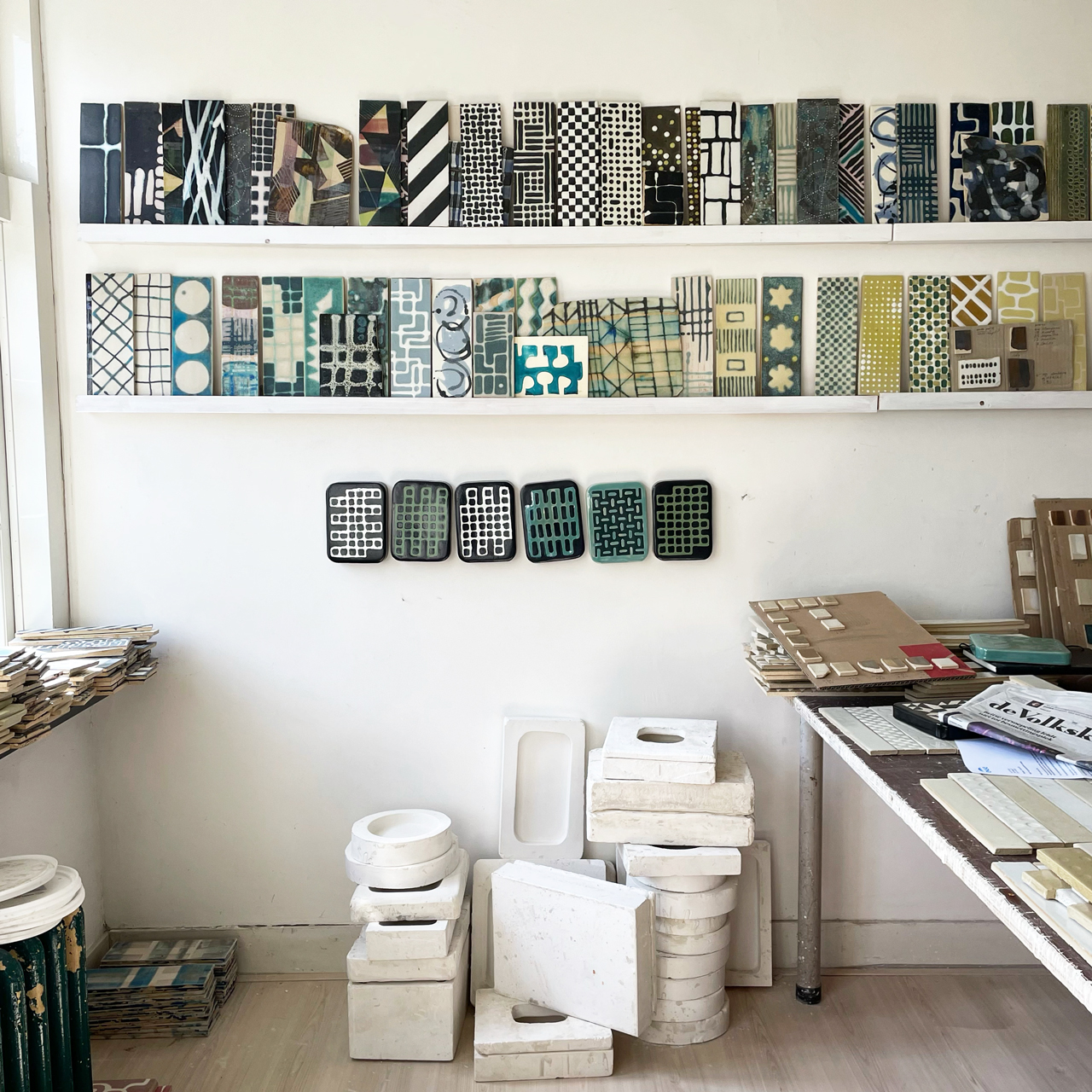
I work in a studio on the upper floor of a 19th century hospital building in the centre of town. It has 4 east facing windows, which makes it a very pleasant place to work.
Nearly everything is made by hand. The tiles, the plaster moulds for slip casting, the frames for the tile panels.
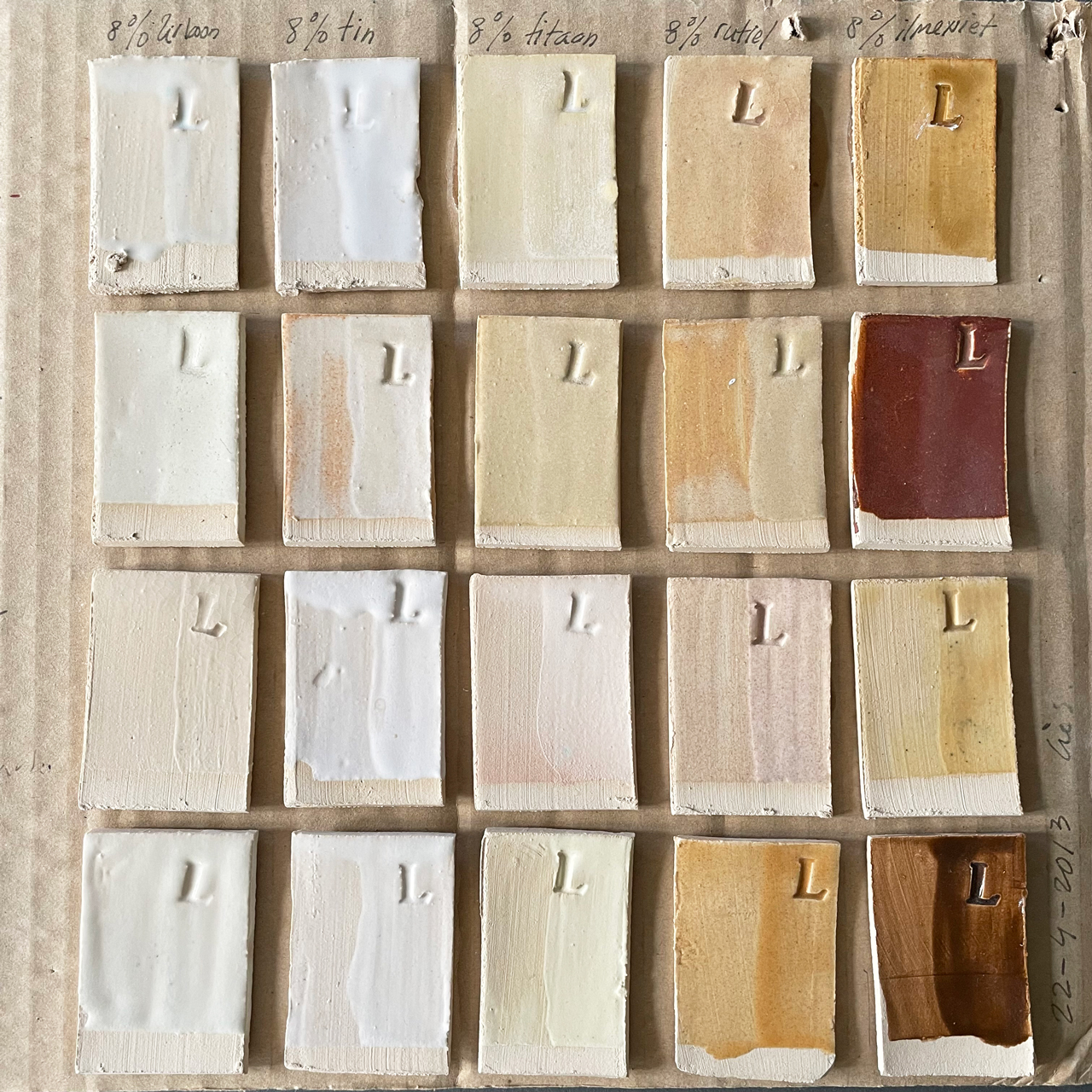
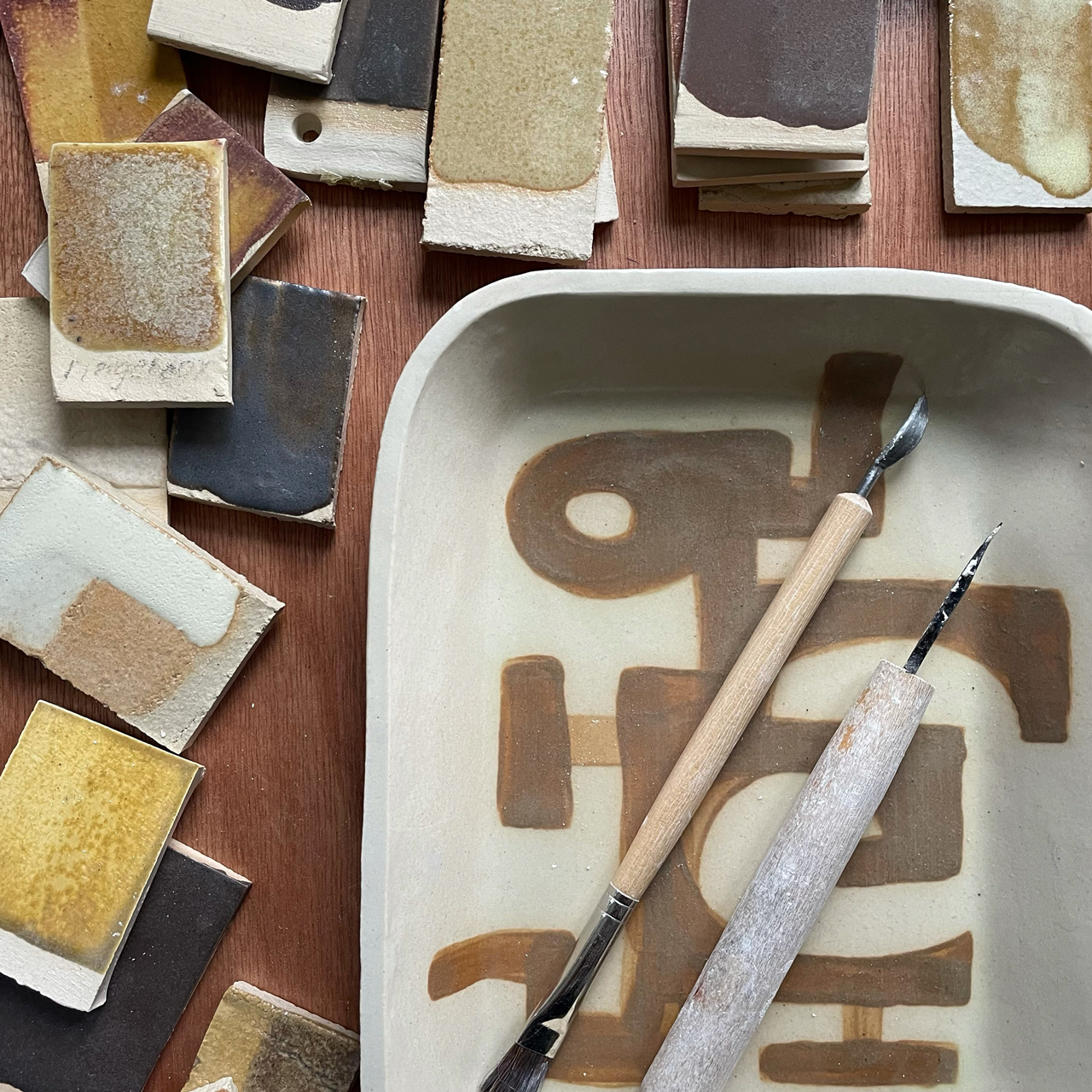
And most importantly: I make my own glazes. It is a chemical process involving raw mining materials, heat and time. I test endlessly to get the surface qualities and the colours I like. A process both satisfying and frustrating, because there are so many variables.
The bespoke frames for the tile tables are designed by me and executed by a local blacksmith.
my work
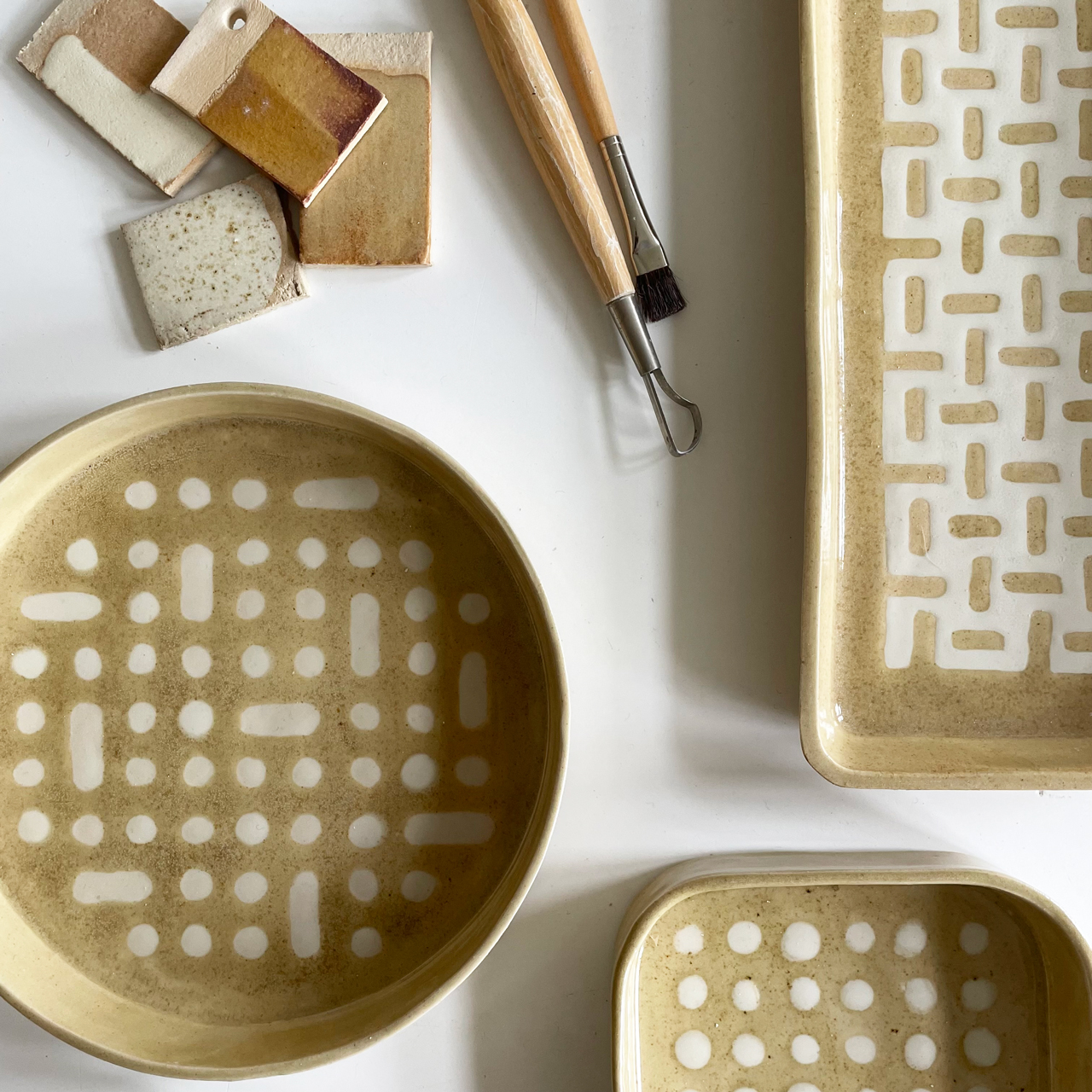
My work often starts with the sketch of a pattern. I then start drawing a grid on the bisque fired work, and apply glazes by hand. The grid I need to anchor the hand drawn lines, and to counterbalance the liveliness of the glazes.
The patterns I apply on tile panels, which I use to make tile tables. A type of furniture especially popular in the sixties and seventies. I try to design my tables as slim as possible, making them more contemporary.
Searching for different ways to present my glaze patterns I make small slip casted wall objects. I also started combining leftover tiles making framed tile panels.
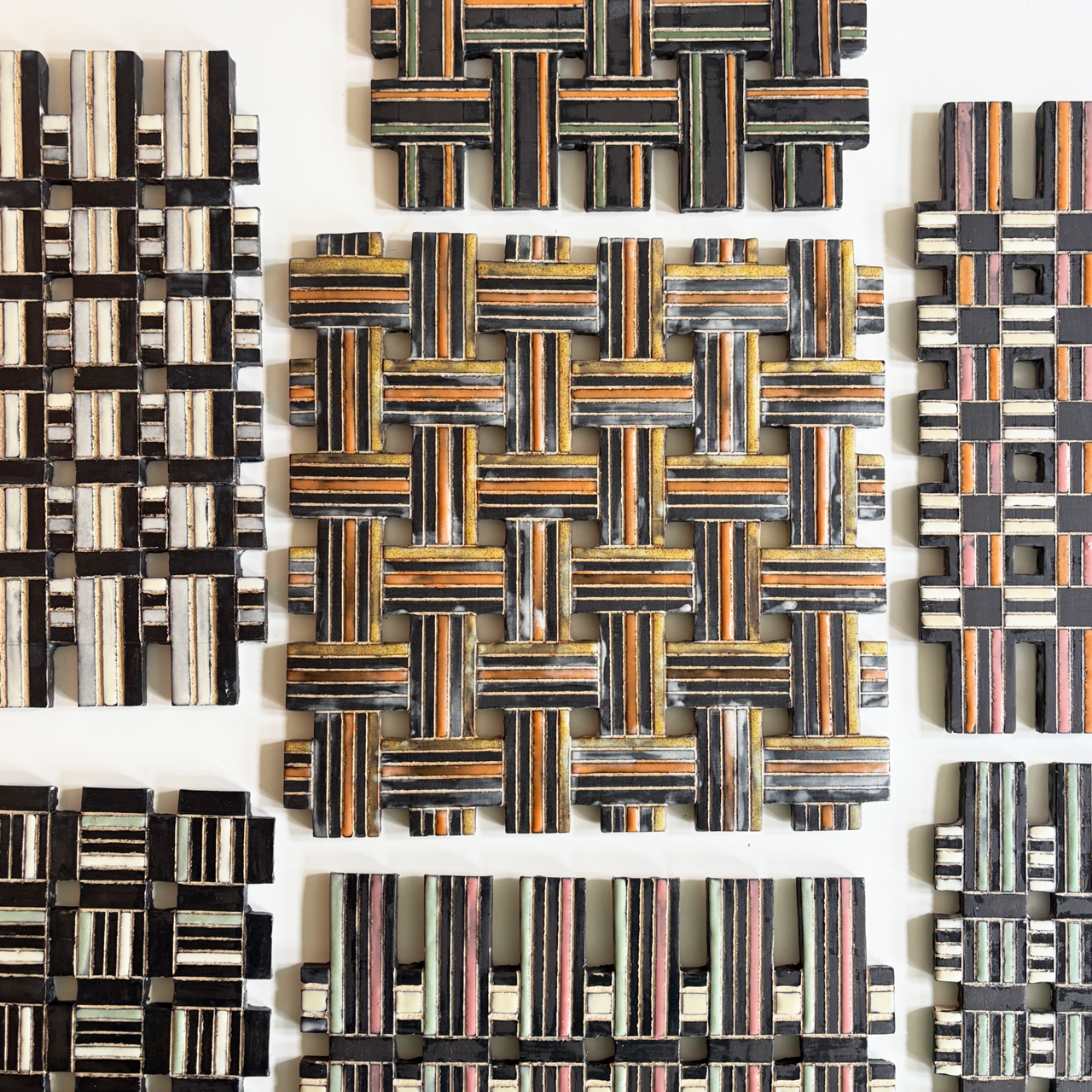
Lately I returned to an old ceramic love of mine: sgraffito technique. This consists of covering the not yet fired piece with a contrasting slip (a very liquid clay) and then scratching lines into the nearly dry slip, uncovering the colour of the clay underneath.
I apply this technique on large tiles with holes in them letting them resemble weaving patterns.
Story
I was trained as an architect at the technical universities of Delft and Berlin. I worked at architectural firms and taught architecture at the HU in Utrecht.
Architecture formed me, gave me a way of looking at the world and knowing the importance of the detail. In other words: ‘the detail is the design’ (quote by Charles Eames).
A desire to make things where I have total control of the process, led me, with some detours, to exploring ceramics.
Very much from the start I realized that the most interesting thing about ceramics are the surfaces. They can have an infinite potential in colour and texture which is quite unique. Similar to architecture, the way you design your surfaces is a key element of the design.
So I seriously started studying ceramic glazes. And combining these glazes in layers and patterns. This results in graphic designs, applied mostly on flat surfaces.
My Studio
I work in a studio on the upper floor of a 19th century hospital building in the centre of town. It has 4 east facing windows, which makes it a very pleasant place to work.
Nearly everything is made by hand. The tiles, the plaster moulds for slip casting, the frames for the tile panels.
And most importantly: I make my own glazes. It is a chemical process involving raw mining materials, heat and time. I test endlessly to get the surface qualities and the colours I like. A process both satisfying and frustrating, because there are so many variables.
The bespoke frames for the tile tables are designed by me and executed by a local blacksmith.
My work
My work often starts with the sketch of a pattern. I then start drawing a grid on the bisque fired work, and apply glazes by hand. The grid I need to anchor the hand drawn lines, and to counterbalance the liveliness of the glazes.
The patterns I apply on tile panels, which I use to make tile tables. A type of furniture especially popular in the sixties and seventies. I try to design my tables as slim as possible, making them more contemporary.
Searching for different ways to present my glaze patterns I make small slip casted wall objects. I also started combining leftover tiles making framed tile panels.
Lately I returned to an old ceramic love of mine: sgraffito technique. This consists of covering the not yet fired piece with a contrasting slip (a very liquid clay) and then scratching lines into the nearly dry slip, uncovering the colour of the clay underneath.
I apply this technique on large tiles with holes in them letting them resemble weaving patterns.